Oriental Cuisine Current location:HomeOriental Cuisine
 Time: 2022/3/28
 Hit: 131371

ANHUI CUISINE GUIDE
Hui Cuisine: A Culinary Journey Through the Mountains of China
────────────────────────────────────────
Wild Harvests · Fermentation Mastery · Mountain Elegance
───────────────────────────────
Anhui Cuisine (Hui Cai), one of China's eight great culinary traditions, traces its roots to the ancient Huizhou region of southern Anhui Province. Nestled in the misty foothills of the Huangshan Mountains, this distinctive cuisine has evolved over more than a thousand years, shaped by the region's mountainous terrain, abundant natural resources, and a unique merchant-scholar culture.
The heyday of Hui Cuisine arrived with the rise of the Huizhou merchants (Huishang) during the Ming and Qing dynasties (1368-1912). These wealthy traders funded the elevation of simple mountain food into an elaborate culinary art form. Lavish banquets became a way to display wealth and negotiate deals, inspiring complex dishes that combined luxury sea ingredients with humble mountain staples.
The cuisine reached its peak in the mid-to-late Qing Dynasty, spreading throughout Jiangsu, Zhejiang, Jiangxi, Fujian, Shanghai, and the middle-lower Yangtze River basin. At one time, it was regarded as the premier of the Eight Great Cuisines of China. Today, Anhui Cuisine remains a testament to the rustic elegance of China's mountainous heartland.

The majestic Huangshan Mountains: birthplace of Anhui Cuisine
────────────────────────────────────────
What sets Anhui Cuisine apart is not just its ingredients or techniques, but a philosophy deeply rooted in the relationship between food, nature, and the Huizhou way of life. Here are the defining traits that make Hui Cai uniquely extraordinary:
Wild Harvest Philosophy
Anhui chefs prioritize foraged ingredients over cultivated crops. Wild mushrooms, bamboo shoots, bracken ferns, and mountain herbs form the foundation of the cuisine. The emphasis is on "wildness" (Ye) and "freshness" (Xian), drawing from the Huangshan micro-climate.
Mastery of Huo Gong (Fire Art)
Huo Gong — masterful control of heat and cooking time — is the cornerstone of Anhui cooking. From fierce fire (Wu Huo) for quick searing to sleeping fire (Mian Huo) for ember-slow simmering, every technique is precisely calibrated.
Fermentation as Transformation
Anhui is renowned for its sophisticated use of fermentation. Dishes like Stinky Mandarin Fish and Hairy Tofu use controlled bacterial breakdown to transform texture and flavor, turning apparent "flaws" into culinary treasures.
Ham as the Secret Weapon
Huangshan ham (Jixi Ham) is used sparingly but impactfully to add deep, smoky, savory notes to soups, stews, and braises. This technique, developed by Huizhou merchants, became a cornerstone of Chinese cooking.
Mountain Treasures (Shan Zhen)
Unique wild ingredients like stone frogs, masked palm civets, and stone ear mushrooms blur the line between food and traditional Chinese medicine, aiming to balance the body's Qi through the consumption of mountain energy.
Medicinal Food Culture
The fusion of food and herbal medicine reflects the Huizhou scholarly tradition. Many dishes incorporate tonic herbs, reflecting the belief that good food should nourish both body and spirit.
Hearty, Rustic Simplicity
Despite its refined techniques, Anhui cuisine celebrates the honest, comforting flavors of mountain life. The result is a cuisine that is both sophisticated and soul-satisfying.
────────────────────────────────────────
Anhui Cuisine encompasses several distinct regional traditions, each reflecting local geography and culinary heritage:
Region | Characteristics | Signature Dishes |
Huizhou Style | The core mountain tradition. Strong emphasis on fermentation, preserved ingredients, stone pot stewing, and wood-fired roasting. This is the canonical Anhui Cuisine. | Stinky Mandarin Fish, Hairy Tofu, Bamboo Shoot Stew with Ham |
Yangtze River Style | Freshwater fish and river snails take center stage. Dishes feature soy sauce and sugar glazes. Cooking is more accessible and river-influenced. | Wuhu Fish Hotpot, Sweet-and-Sour Carp, Steamed River Fish |
Huai River Style | Inspired by Shandong and Jiangsu traditions. Heavy use of garlic and scallion, wheat-based staples, and hearty stews with warming spices. | Anqing Pork Belly Stew, Fermented Tofu with Chili, Braised Lamb |
────────────────────────────────────────
These iconic dishes define the Anhui dining experience — from the legendary fermented fish that divides opinion to the lavish merchant's stew that made history.
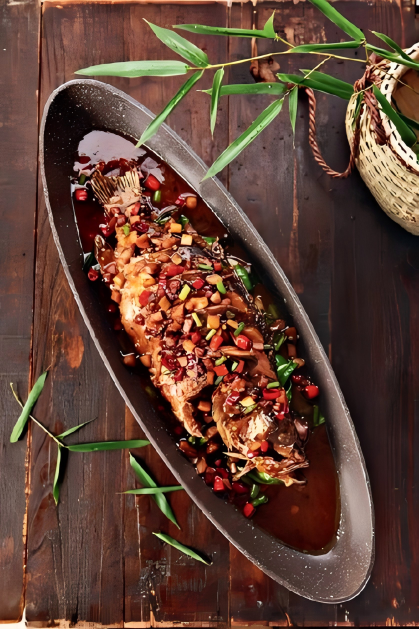
Stinky Mandarin Fish
Umami-Rich · Complex · Aromatic Huizhou Region, Southern Anhui

Fresh mandarin fish lightly salted and fermented in ceramic pots with rice wine and chili paste for several days. The controlled fermentation breaks down proteins, transforming the flesh into an incredibly tender, aromatic delicacy. Braised in soy, Shaoxing wine, ginger, and green onions until the sauce becomes rich and glossy. Despite the pungent name, the finished dish offers complex, deeply savory flavors that reward the adventurous palate.
Li Hongzhang Hotchpotch
Rich · Layered · Luxurious Huizhou, Anhui (Qing Dynasty, c. 1890s)
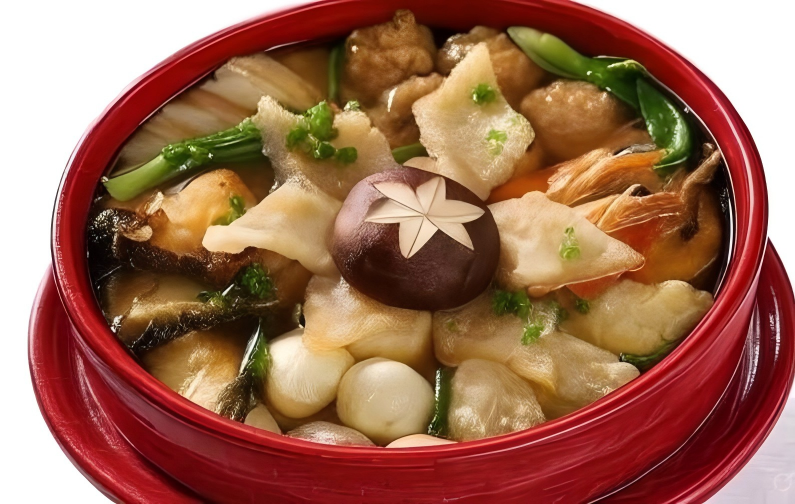
Named after the famous late Qing statesman Li Hongzhang, this legendary one-pot stew was born from improvisation. When his chefs ran low on ingredients during a banquet for American diplomats, Li ordered all remaining kitchen staples tossed into a single pot — sea cucumber, squid, tofu, ham, mushrooms, chicken, and more. The result was a magnificent layered stew that became a symbol of Huizhou merchant hospitality and ingenuity.
Bamboo Shoots with Ham
Fresh · Savory · Delicate Huangshan Mountain Region
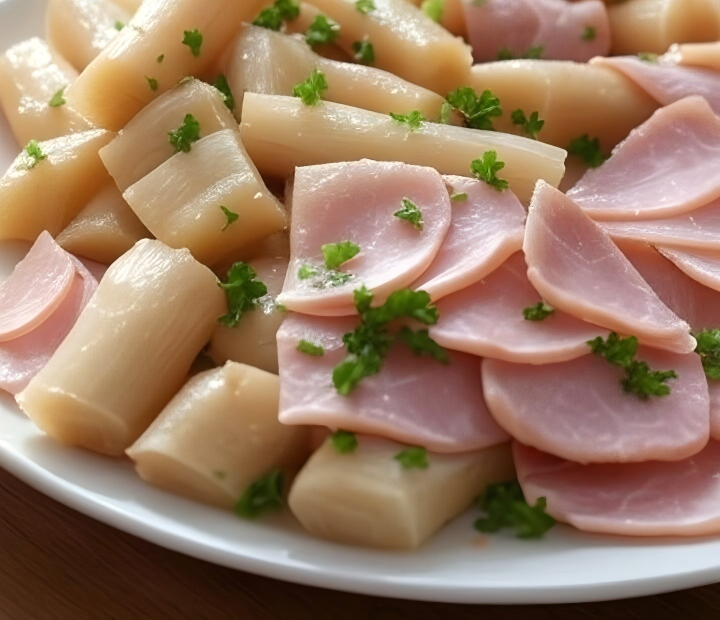
Fresh spring bamboo shoots from the Huangshan hills — harvested at their tender peak — are slow-simmered with slices of Huangshan ham, pork belly, and wild mushrooms. The ham infuses the clear broth with deep, smoky savoriness while the bamboo shoots contribute a delicate, earthy sweetness. This is the quintessential Huizhou mountain-cooking combination, celebrating seasonal freshness and the harmony between land and kitchen.
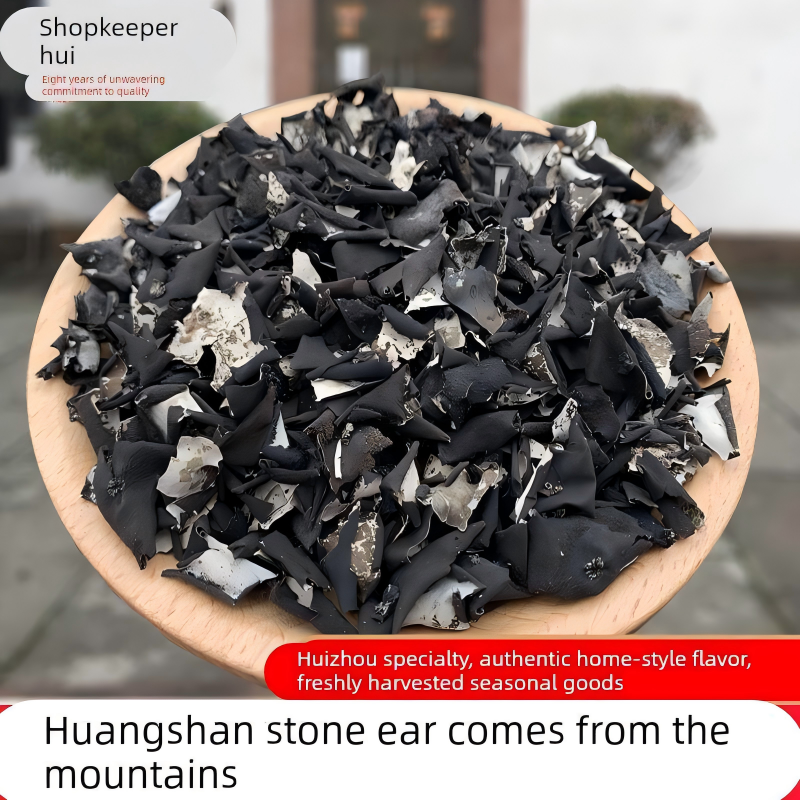
Stone Ear Mushroom with Tofu
Earthy · Mineral · Gentle Umami Huangshan Mountain Region
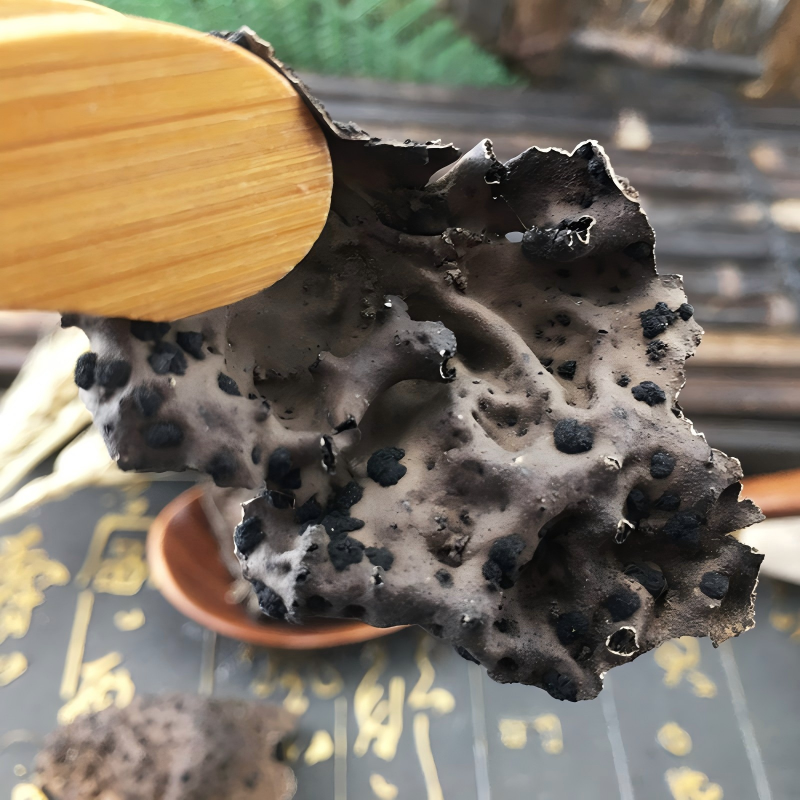
Stone ear (Shi Er), a wild lichen harvested from the rocks of Huangshan, is gently simmered with soft tofu in a light, savory broth. The stone ear has a uniquely mineral, slightly crunchy texture that absorbs the umami-rich broth beautifully. This elegant vegetarian dish embodies the Anhui philosophy of "Tian Ran Ben Wei" — preserving the natural essence of mountain ingredients with minimal intervention.
Huangshan Braised Pigeon
Rich · Savory-Sweet · Tender Huangshan, Southern Anhui

Young pigeons from the Huangshan highlands are braised slowly in dark soy sauce, rock sugar, Shaoxing wine, and ginger until the meat is fall-off-the-bone tender. The glaze is rich and glossy, with a subtle sweetness from the rock sugar balancing the savory depth of the soy. Served as a prized mountain delicacy, this dish reflects the Huizhou tradition of treating game and poultry with the same respect as fine ingredients.
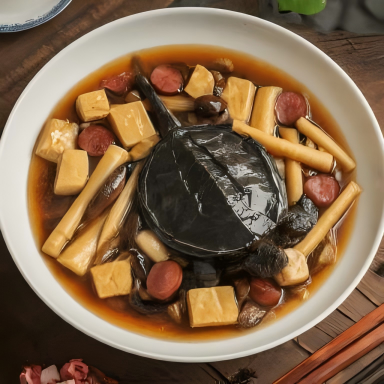
Stewed Turtle with Ham
Luxurious · Silky · Nourishing Huizhou, Southern Anhui
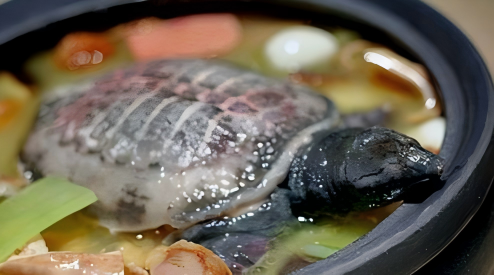
A luxurious mountain treasure, soft-shelled turtle is slow-stewed with Huangshan ham, lean pork, bamboo shoots, garlic, ginger, and green onions over charcoal fire. The long, gentle cooking extracts collagen from the turtle shell, creating a silky, golden broth that is intensely nourishing. Ham and pork add savory depth while bamboo shoots provide texture. The result is a dish that is elegantly rich without being greasy — a true celebration of mountain luxury.
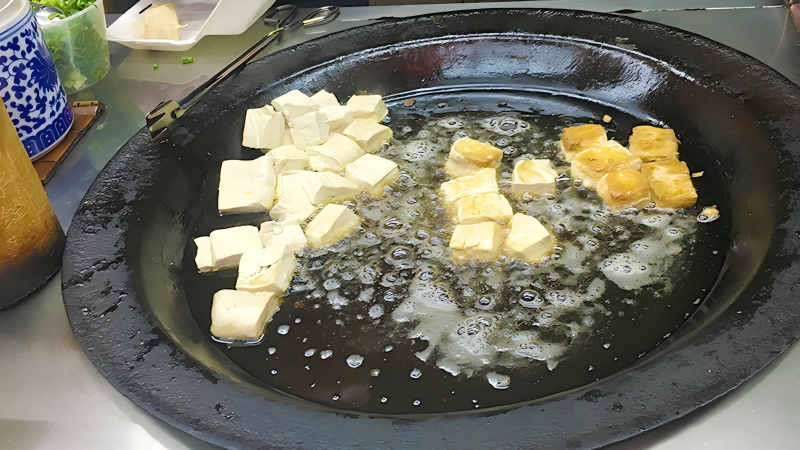
Hairy Tofu (Mao Doufu)
Creamy · Crispy · Pungent · Umami Tunxi & Huangshan Tourist Villages
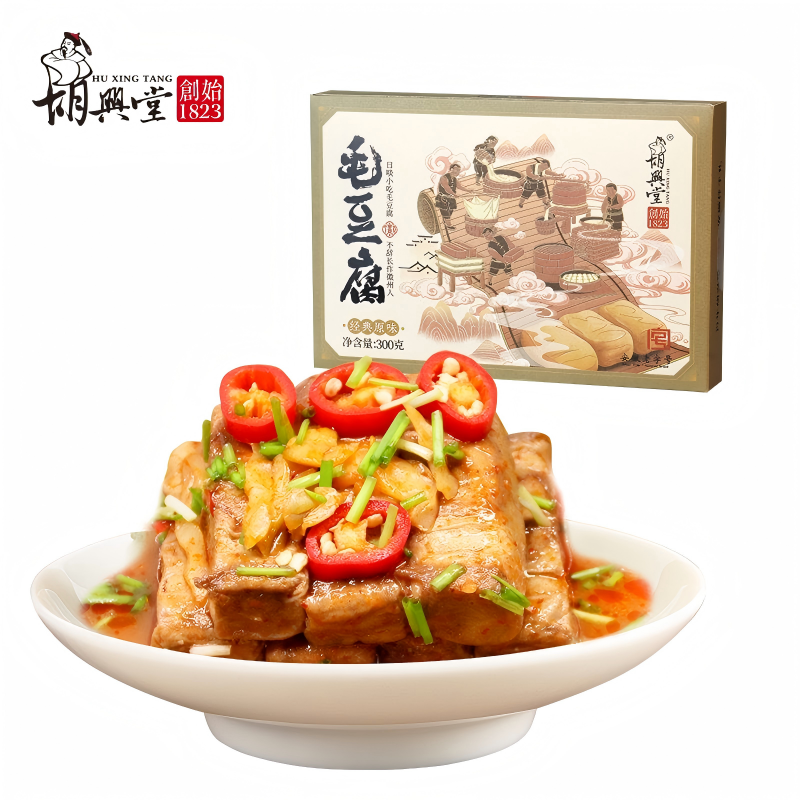
Fresh tofu is set in a cool, humid environment for three to five days until a soft, white Mucor mould grows across the surface — resembling fine fur. The mould-cultured tofu is then pan-fried until the exterior is golden and crispy, while the interior becomes creamy and custard-like. Dressed with soy sauce, sesame oil, scallion, and chili paste, this is among the most distinctive fermented preparations in all of Chinese cuisine — an acquired taste that rewards the curious.
Hui-Style Roasted Pork Belly
Savory · Rich · Silky · Sweet Huizhou Region, Southern Anhui
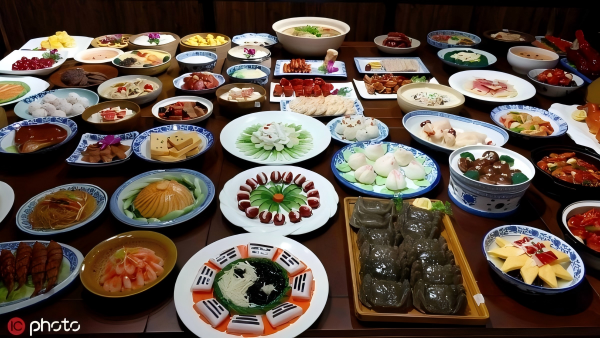
Premium pork belly is slow-braised with rock sugar, dark soy sauce, and Shaoxing rice wine until the meat is meltingly tender and the sauce reduces to a glossy, caramel-colored glaze. The Hui-style preparation uses more oil and darker soy than the Jiangsu style, resulting in a more robust, intensely savory profile. Often served at merchant banquets as a symbol of prosperity and abundance, it is the ultimate comfort food of the Anhui table.
────────────────────────────────────────
Anhui cuisine is defined by its mastery of Huo Gong — the art of fire and heat control. Every technique is designed to honor the natural essence of mountain ingredients:
Braising (Hong Shao / Red Braising)
The signature technique of Anhui cuisine. Meats are seared at high heat then slow-simmered in dark soy sauce, rock sugar, and Shaoxing wine for hours. The long cooking breaks down collagen, creating melt-in-your-mouth texture and a rich, glossy sauce. Used for dishes like Braised Pork Belly, Stinky Mandarin Fish, and turtle preparations.
Stewing (Dun / Wen Dun)
Gentle, long-simmered cooking in clay pots over charcoal or low flame. Ingredients cook slowly in their own juices with minimal intervention, preserving nutrition and flavor. The quintessential technique for the famous Li Hongzhang Hotchpotch and bamboo shoot dishes.
Steaming (Zheng)
Used to preserve the delicate freshness of river fish and mountain vegetables. Steaming allows the natural flavors of the ingredients to shine, requiring only light seasoning with soy sauce and ginger. Particularly suited for freshwater fish from Huangshan streams.
Stone Pot Cooking (Shi Guo Dun)
A distinctive Anhui technique using heavy clay pots heated over charcoal. Ingredients are slow-cooked in these pots, absorbing the mineral essence of the stone and acquiring a subtle smoky aroma. This method is especially associated with the Huizhou mountain tradition.
Smoking (Chuan Wei / Xi Yan)
A traditional preservation method from the Huizhou mountains. Ingredients are exposed to aromatic wood smoke (often pine or fruit wood) for several hours, infusing them with a delicate smokiness while extending shelf life. Smoked duck and smoked fish are beloved examples.
Fermentation (Yan Zhu / Zi Ran Fa)
Perhaps the most unique aspect of Anhui cuisine. Controlled microbial fermentation is used to transform ingredients — fish develops its signature aroma, tofu grows its characteristic white mould. Fermentation requires precise control of time, temperature, and humidity — a craft honed over centuries.
────────────────────────────────────────
Beyond the signature dishes, the Anhui table offers a rich variety of mountain-inspired creations:
| ?? Bamboo & Pork Braise Chunked pork belly slow-braised with dried bamboo shoot, wood ear mushroom, and ginger in dark soy until tender and richly glazed. |
| ?? Tofu with Three Whites Delicate Hui-style braise of tofu, bamboo shoot, silver mushroom, and ham — the three whites creating a light, elegant contrast with the savory ham. |
| ?? Steamed Meat with Rice Flour Pork belly coated in ground glutinous rice with five-spice, steamed in bamboo baskets for an hour. The rice absorbs the fat, creating aromatic, dense layers. |
| ?? River Fish Hotpot Whole freshwater fish slow-simmered in clay pots with bamboo, ham, and aromatics. The long cooking concentrates the broth into something extraordinary. |
────────────────────────────────────────
"Zi Ran Zhi Mei, Jian Dan Zhi Wei" — "Natural Beauty, Simple Flavors"
◆ Respecting the Ingredient
The golden rule of Anhui cooking is to let the main ingredient shine. Whether it is bamboo shoots from Huangshan, mandarin fish from mountain streams, or wild herbs foraged at dawn, the goal is for diners to taste the essence of that ingredient — not to mask it.
◆ Harmony with Nature
Anhui cuisine embodies the Daoist principle of living in harmony with nature. Dishes are prepared according to seasons — spring bamboo shoots, autumn mushrooms, winter-preserved vegetables — reflecting the natural cycle of the mountains.
◆ Scholarly Restraint
The Huizhou tradition merged merchant prosperity with Confucian scholar values. The result is a cuisine that is lavish in ingredients yet restrained in technique — bold flavors achieved through subtlety, complexity born from simplicity.
◆ Nourishment of Body and Spirit
Rooted in traditional Chinese medicine, Anhui cooking sees food as medicine. Many dishes incorporate herbs and ingredients chosen not just for flavor but for their ability to balance the body's Qi, nourish the blood, and strengthen the spirit.
◆ The Merchant's Table
The Huizhou merchant tradition transformed the mountain village table into a stage for diplomacy and deal-making. Banquets were expressions of values — hospitality, generosity, and refined taste — turning a meal into a lasting impression.
 Contact us :



WeChat

WhatsApp
Copyright ©2026-2031 Terms of Service Privacy Policy Return Terms Travel agency qualification number