
China DMC Current location:HomeChina DMC
 Time: 2026/6/29
 Hit: 18712

Oriental Surprises Travel Presents
──────────────────────────────────────────────────
NANJING, CHINA
Ancient Capital of Six Dynasties
A Premier Destination Guide for International Travelers
"Each brick of the ancient wall tells a thousand years of stories"— Discover Jinling, Nanjing
──────────────────────────────────────────────────
Nanjing, meaning "Southern Capital" in Chinese, stands as one of China's four great ancient capitals and one of the most historically significant cities in the world. With over 2,500 years of documented history, Nanjing has served as the capital for six dynasties and witnessed some of the most pivotal moments in Chinese history. Today, it is the capital of Jiangsu Province, a thriving hub of culture, education, and innovation.
Location | Eastern China, Yangtze River Delta |
Province | Jiangsu |
Population | Approx. 9.5 million |
Climate | Humid subtropical, mild seasons |
Best Time to Visit | March–May / September–November |
Local Nickname | Jinling (Golden City) |
UNESCO Sites | Ming Xiaoling Mausoleum (World Heritage) |
Famous For | Ancient capitals, Ming history, river culture |
──────────────────────────────────────────────────
Nanjing's rich tapestry of history comes alive through its extraordinary landmarks. From imperial mausoleums to cultural museums, each site offers a unique window into China's grand past.
Zhongshanling ? Purple Mountain ? Free Admission
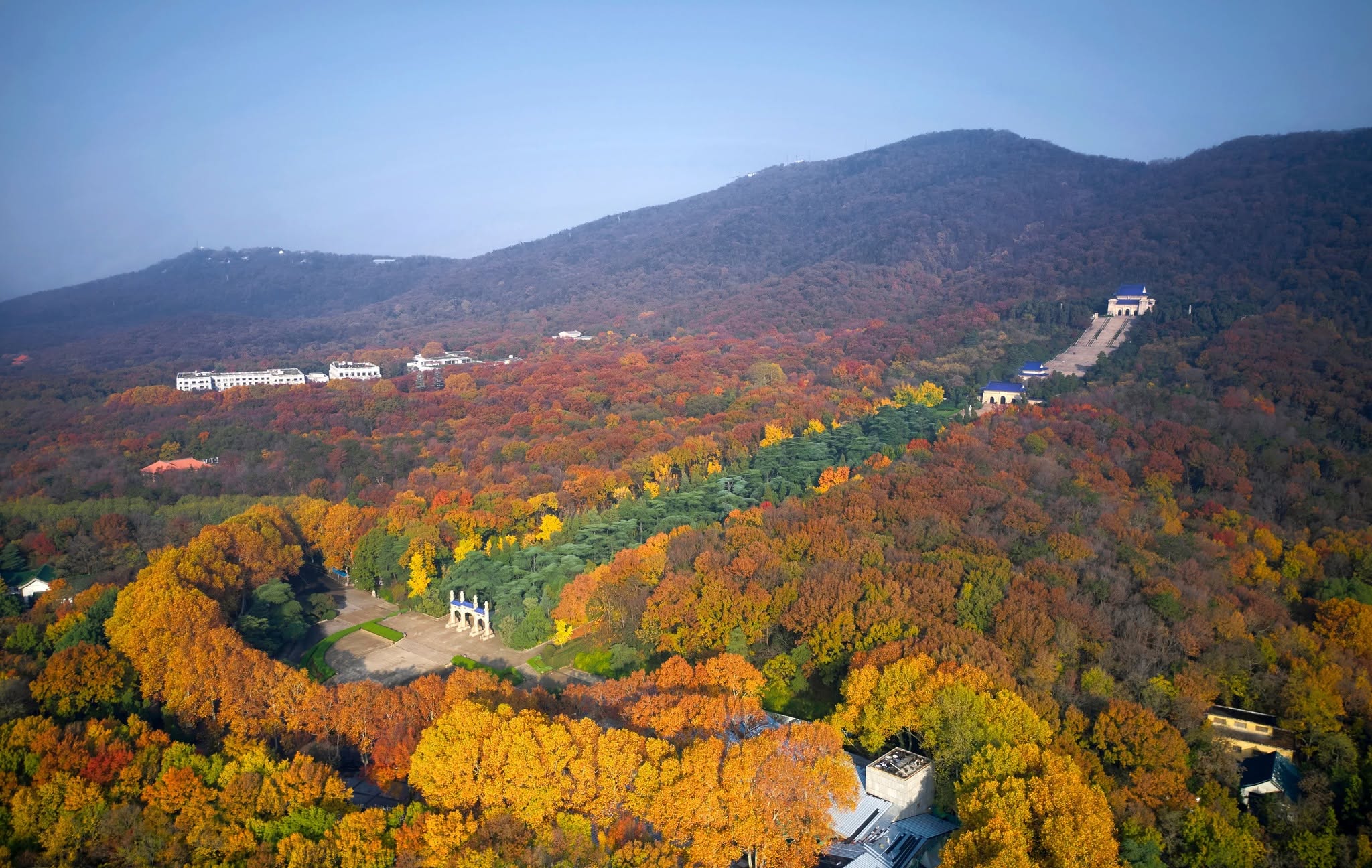
The mausoleum of Dr. Sun Yat-sen (1866–1925), the founding father of modern China, is one of the most revered national monuments in the country. Perched on Purple Mountain, the grand complex covers nearly 20 acres and features a bell-shaped architectural design symbolizing awakening and national spirit. Visitors ascend 392 stone steps—representing China's population at the time—through a majestic avenue flanked by cypress trees. The mausoleum passage, stele pavilion, and sacrificial hall form a breathtaking sequence of white granite and blue glazed tiles. The site also includes the Sun Yat-sen Music Stage, one of the most beautiful outdoor performance venues in China.
──────────────────────────────
UNESCO World Heritage Site Tomb of Hongwu Emperor

A UNESCO World Heritage Site, Ming Xiaoling is the joint mausoleum of Zhu Yuanzhang (the Hongwu Emperor), founder of the Ming Dynasty, and Empress Ma. As one of the largest imperial tomb complexes in China, it lies at the southern foot of Purple Mountain. The most iconic feature is the half-mile-long Sacred Way (Shendao), lined with four pairs of stone warriors and 12 pairs of mythical guardian creatures—lions, camels, elephants, and horses—each carved with extraordinary detail. The complex also includes the Lingxing Gate, the Square Pavilion, and the Bao'en Pavilion. In autumn, ginkgo trees along the Sacred Way turn a brilliant gold, creating one of Nanjing's most photographed scenes.
──────────────────────────────
Fuzimiao Nanjing's Cultural Heart Free to Enter

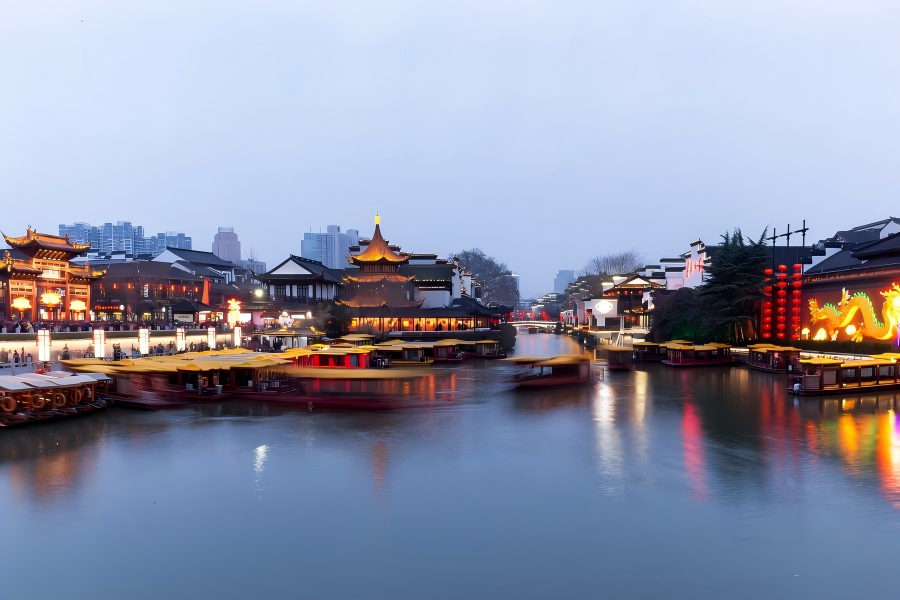
The Nanjing Confucius Temple (Fuzimiao), one of the four major Confucian temples in China, was first built in 1034 during the Song Dynasty along the banks of the Qinhuai River. The temple complex features Dacheng Hall—the largest figure of Confucius in China—and 38 jade-and-gold panels depicting his life. Adjacent to the temple lies the Jiangnan Imperial Examination Hall (Jiangnan Gongyuan), the largest examination venue in Chinese history where scholars once competed for government positions over multi-day exams. The Qinhuai River, Nanjing's "Mother River," comes alive at night with colorful lantern reflections dancing on the water. A 50-minute painted boat cruise (CNY 60–80) offers a romantic journey through a thousand years of literary history, passing under illuminated bridges and past traditional eateries serving local snacks.
──────────────────────────────
Changjiang Road 600+ Years of History

The Presidential Palace complex on Changjiang Road spans over 600 years of Chinese history. This remarkable site has served as the residence of Ming Dynasty princes, the offices of Qing Dynasty governors, the grand palace of the Taiping Heavenly Kingdom, and most famously, the headquarters of Sun Yat-sen's provisional government in 1912—where he was declared the first President of the Republic of China on January 1. Later, Chiang Kai-shek used the second floor of Zichao Building as his office. Today, visitors can explore the Zhongyang Gate, the original presidential offices, Sun Yat-sen's temporary office and residence, the East Garden, and a fascinating Republic of China-era post office that still sends postcards. The 1912 District adjacent to the palace is now a trendy bar and dining area in early 20th-century Republican-style architecture.
──────────────────────────────
Ming Dynasty Fortification 25 km Preserved

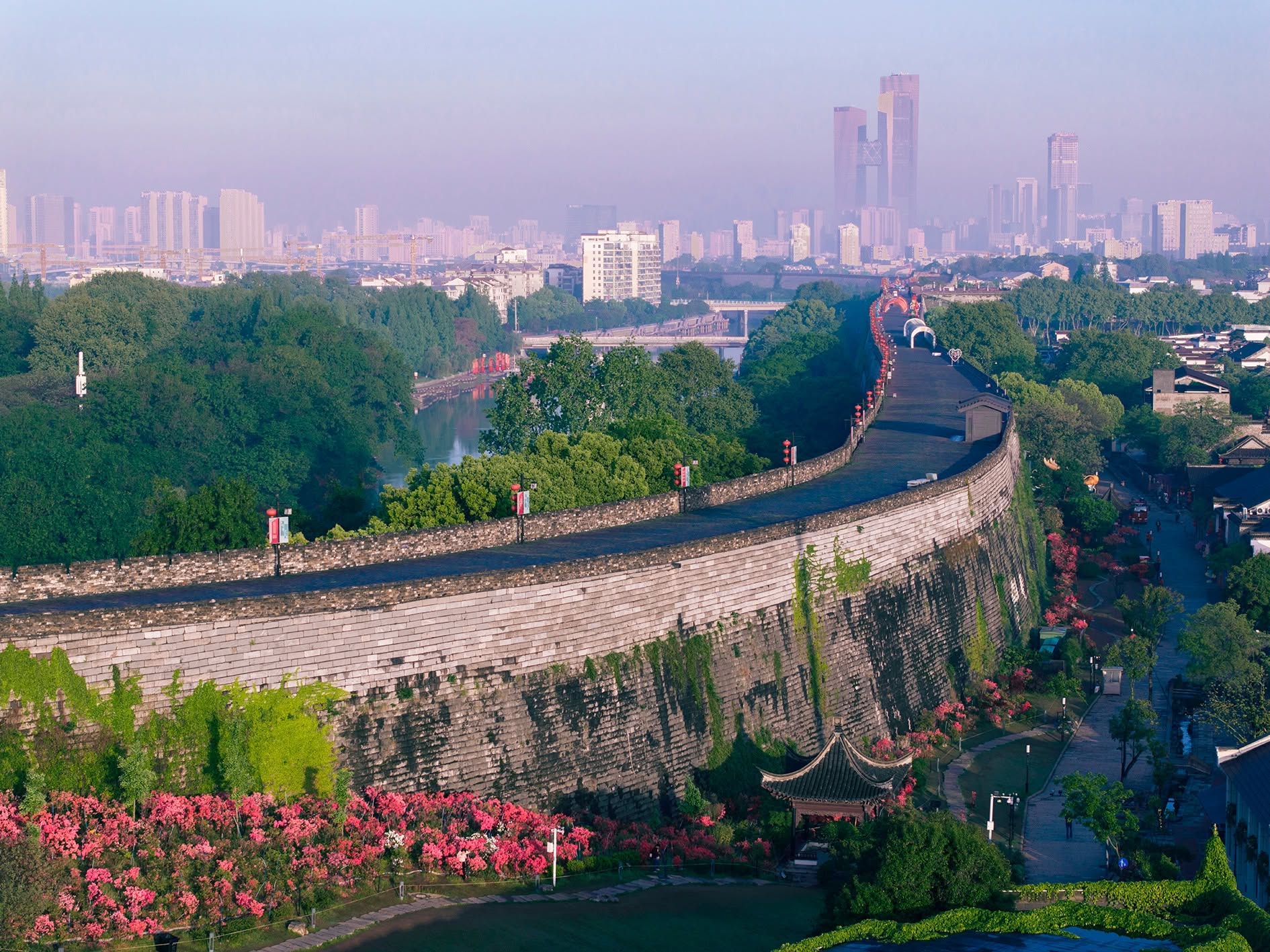
Ordered by the Hongwu Emperor Zhu Yuanzhang in 1366, the Nanjing City Wall took 21 years to complete and required the labor of 200,000 workers and 7 million cubic meters of earth. Stretching 25 kilometers with walls up to 21 meters thick, it was one of the longest city walls in the world. The wall's unique feature is its irregular shape—unlike Beijing's symmetric Forbidden City wall—adapted to Nanjing's natural landscape of hills and lakes. The most spectacular section is the Zhonghua Gate (Chinese Gate), a massive barbican fortress with 27 vaulted chambers built into the wall itself. Walking along the well-preserved north section between Shence Gate and Taiping Gate rewards visitors with panoramic views of Xuanwu Lake, Jiming Temple, and the Purple Mountain skyline.
──────────────────────────────
City Oasis 450 Hectares Free Entry
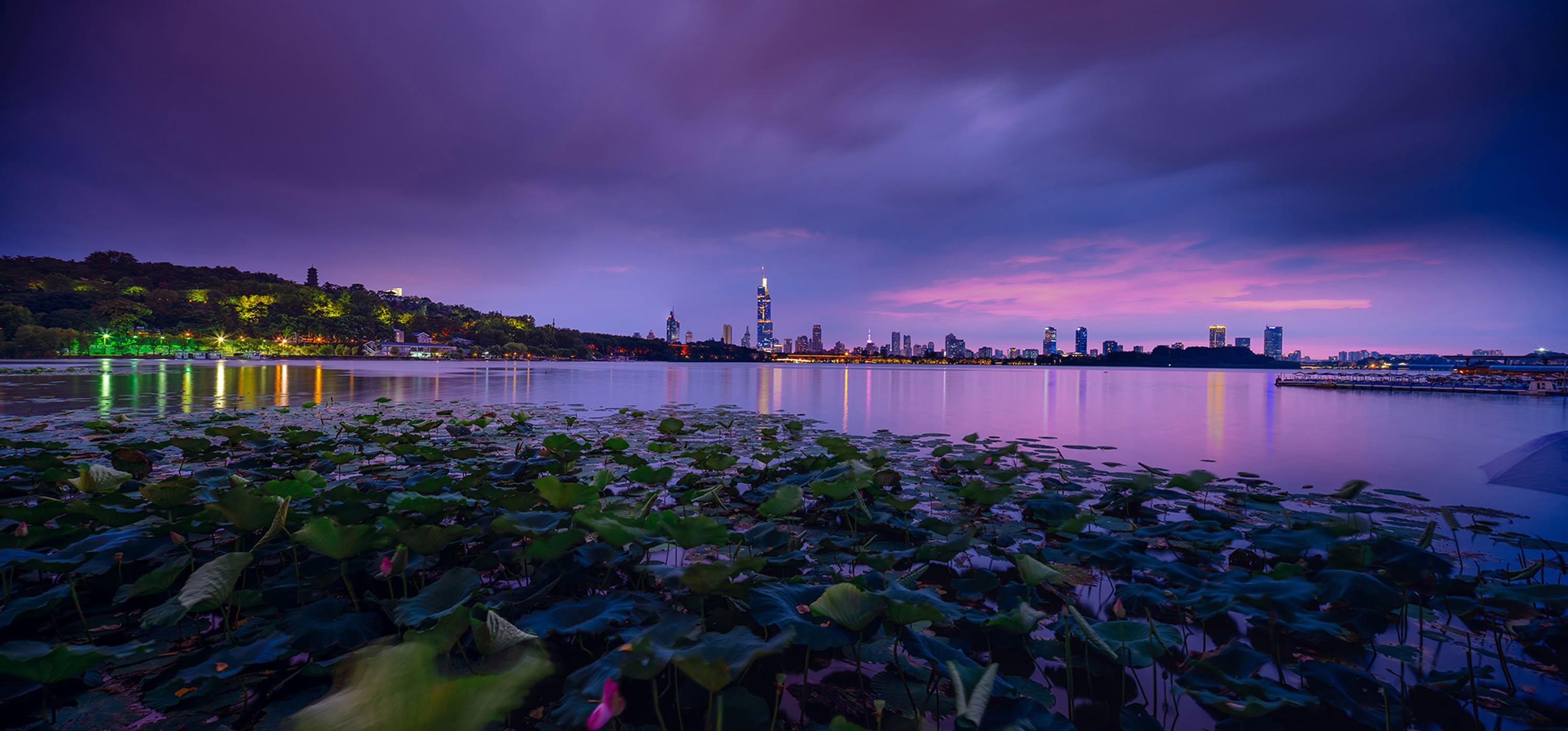
Just steps from the ancient City Wall and Jiming Temple, Xuanwu Lake (Xuanwu Hu) is one of China's largest imperial lake gardens, spanning 450 hectares in the heart of the city. The lake's five islands are connected by intricate arched bridges—including the iconic Wu Xing Dun, the Five-Island Cluster—creating a landscape of weeping willows, lotus ponds, and flowering gardens that changes beautifully with every season. In spring, plum blossoms and peach flowers paint the banks pink; in summer, thousands of lotus blooms transform the lake surface. Rowboats and paddle boats offer a leisurely way to explore, while the lakeside玄武湖书吧 (book cafe) provides a tranquil reading spot with lake views. The park is popular with locals doing tai chi, square dancing, and morning qigong.
──────────────────────────────
Historical Remembrance Free Entry
The Memorial Hall of the Victims in Nanjing Massacre by Japanese Invaders is a deeply solemn tribute to the approximately 350,000 lives lost during the six-week atrocity that began on December 13, 1937. The hall features outdoor sculpture exhibitions, partially excavated mass burial sites where victims' remains are preserved in situ, and extensive indoor galleries displaying historical documents, photographs, and personal testimonies. The exhibition uses a combination of text panels, artifacts, and multimedia installations to present the historical context, the atrocities, and the aftermath. The outdoor areas include the "Wailing Wall" with names of verified victims, the "Roaming Souls Bridge," and a contemplative water garden. A visit here is a profoundly moving and essential experience for understanding the complexities of 20th-century Chinese history.
──────────────────────────────
Barbican Fortress Nanjing's Largest Gate

Zhonghua Gate, also known as the "Gate of China," is the southern gate of Nanjing's Ming Dynasty city wall and one of the most impressive castle gate complexes in existence. Built between 1366 and 1387, this massive barbican fortress features a unique "neck" and "瓮城" (citadel) design—three rectangular openings and 27 small chambers inside the wall, creating a labyrinthine defensive system. Once inside the gate's three-story wooden pavilion atop the stone base, visitors can look down through arrow slits at the strategic design that would trap invading armies. The chambers below once stored grain and military equipment. At night, the gate is dramatically illuminated, offering excellent photography opportunities. The adjacent Taiping Taiping Museum covers the Taiping Heavenly Kingdom uprising.
──────────────────────────────
One of China's Three Largest Museums 400,000+ Artifacts

Nanjing Museum is one of China's oldest and largest museums, with a collection of over 400,000 artifacts spanning 5,000 years of Chinese civilization. Founded in 1933, the museum's six exhibition halls include the Jurassic Hall, the Ancient Artifacts Hall, the Folk Customs Hall, the Republic of China Hall (recreating a 1930s Nanjing street scene with vintage shops and a period tram), and the Treasury of Brocade and Jade. Highlights include the "Seven Sages of the Bamboo Grove" brick paintings from the Eastern Jin Dynasty and a Yuan Dynasty blue-and-white porcelain vase. A children's discovery zone offers hands-on archaeological experiences. Note: Free admission but advance booking is required via the official website.
──────────────────────────────
Famen Temple Succession Buddhist Heritage
Niushou Mountain (Niushoushan), located 20 kilometers west of central Nanjing, is a breathtaking Buddhist cultural park that harmoniously blends natural scenery with contemporary architecture. The crown jewel is the Famen Temple (Famen Si), which houses a sacred bone relic of Buddha, one of the most revered Buddhist artifacts in the world. The recently constructed Foding Palace (Foding Gong) features two stunning dome-shaped Buddhist palaces—one wrapped in a gold geometric mesh, the other with an openwork red dome—rising dramatically from the mountainside. The 9-story pagoda of Famen Temple dates back to the Tang Dynasty and has been rebuilt several times. The complex also includes traditional Buddhist halls, the Yuhua Grottoes, and the scenic Qianren Bridge. The evening light show on the domes is spectacular.
──────────────────────────────
──────────────────────────────────────────────────
Beyond its monuments, Nanjing offers immersive cultural experiences that connect visitors to the living traditions of the Jiangnan region.
Qinhuai River Night Cruise
Cruise under illuminated bridges and past ancient architecture aboard a traditionally painted Huafang boat. Enjoy traditional music performances including Guqin (seven-stringed zither) and Jiangnan opera while sampling local tea and snacks. Best experienced between 19:00–21:00 when lanterns cast golden reflections on the water.
─────────────────────────
Yunjin Cloud Brocade
Recognized by UNESCO as an Intangible Cultural Heritage of Humanity, Yunjin Cloud Brocade dates back nearly 1,600 years. Visit the Yunjin Cloud Brocade Museum to watch master weavers create intricate brocade fabrics using techniques unchanged for centuries. The museum occupies a Ming Dynasty official's residence dating back 600 years.
─────────────────────────
Nanjing Paper Cutting (Jianzhi)
A traditional Chinese folk art with a 1,500-year history, Nanjing paper cutting is known for its delicate depictions of Chinese characters, flowers, and birds. Workshops at the Confucius Temple area offer hands-on sessions for beginners.
─────────────────────────
Nanjing Puppet Shows & Shadow Theater
Traditional puppet performances and shadow puppetry can be enjoyed at Laomendong Historic District, a beautifully restored area of narrow alleyways and traditional courtyard houses. The Deyun Society, a famous crosstalk (xiangsheng) venue, also performs nearby.
─────────────────────────
Plum Blossom Festival (February–March)
Nanjing's Purple Mountain is one of China's "Four Famous Cultivation Gardens" for plum blossoms. The annual Plum Blossom Mountain Luohan Fair draws thousands of visitors to view over 30,000 plum trees of 350 varieties in bloom.
─────────────────────────
Qinhuai Lantern Festival (January–March)
The 39th Qinhuai Lantern Festival transforms the Confucius Temple area into a wonderland of illuminated lanterns. Handcrafted by master artisans, the displays range from delicate traditional motifs to spectacular modern installations reflected beautifully on the river.
─────────────────────────
──────────────────────────────────────────────────
Nanjing cuisine is a jewel of Jiangsu cooking (Su Cai), celebrated for its refined flavors, precise preparation, and elegant presentation. The city's position along the Yangtze River and its imperial history have shaped a culinary tradition that prioritizes freshness and subtle seasoning. Street food lovers will find paradise in the Confucius Temple and Laomendong areas, where vendors have been serving traditional snacks for generations.
Nanjing Salted Duck (Jinling Ruanya)
Nanjing's most famous dish, featuring a 40-day brine cure followed by slow cooking in savory broth. The result is incredibly tender, juicy meat with a delicate saline flavor. Best sampled at old restaurants near Zhongshan Scenic Area. Price: CNY 35–45 per portion.
─────────────────────────
Duck Blood Vermicelli Soup (Xuewu Fenxian Tang)
A beloved Nanjing street food, this hearty soup combines silky duck blood cubes with transparent bean thread noodles in a rich, spiced broth. Garnished with cilantro and chili oil, it is both nutritious and warming. Universally available at Confucian Temple food stalls. Price: CNY 10–15.
─────────────────────────
Soup Dumplings (Xiaolongbao)
Nanjing-style xiaolongbao are smaller and more delicate than their Shanghai counterparts, with paper-thin skins enclosing a generous portion of rich pork broth and filling. The trick is to bite a small hole first to drink the broth, then enjoy the dumpling. Try at Ma Xiu or other local chains. Price: CNY 15–20 per order.
─────────────────────────
Plum Blossom Cake (Meihua Ga)
These delicate pastries filled with sweet osmanthus flower paste and glutinous rice are a Nanjing specialty sold at historic bakeries like Lu's Plum Blossom Cake in Xinjiekou. The flower motif reflects Nanjing's long association with plum blossoms. Price: CNY 6–10 per piece.
─────────────────────────
Stinky Tofu (Chou Doufu)
A crispy-on-outside, soft-on-inside fermented tofu, fried to golden perfection and served with spicy sauce, pickled vegetables, and cilantro. Despite its pungent aroma, it is an addictive treat found at every night market in Nanjing. Price: CNY 8–15.
─────────────────────────
Lion Head Meatballs (Shizitou)
Large, fluffy pork meatballs stewed in rich gravy, typically served at upscale Jiangsu restaurants. Made with finely minced pork and high-fat content for a melt-in-mouth texture, these imperial-era dishes are a must-try for traditional cuisine lovers.
─────────────────────────
Nanjing Rice Vermicelli (La Mian)
Smooth, silky rice noodles served in a clear, flavorful broth with sliced duck meat, pickled vegetables, and a drizzle of sesame oil. A warming breakfast staple. Price: CNY 12–18.
─────────────────────────
Osmanthus Cake & Sweet Dumplings (Tangyuan)
Seasonal sweet treats flavored with fragrant osmanthus flowers that bloom in Nanjing's parks every autumn. Available at traditional dessert shops throughout the city.
─────────────────────────
──────────────────────────────────────────────────
Best Seasons to Visit
Spring (March–May) and autumn (September–November) are ideal. Spring brings plum blossoms and peach flowers; autumn offers golden ginkgo along Ming Xiaoling's Sacred Way and comfortable temperatures. Summer is hot and humid (30–35°C); winter is cold but less crowded.
─────────────────────────
Getting There
Nanjing Lukou International Airport (NKG) offers direct flights from major international hubs including Dubai, Frankfurt, and several Southeast Asian cities. Nanjing is also reachable by high-speed train from Beijing (3.5 hours) and Shanghai (1 hour).
─────────────────────────
Getting Around
Nanjing has an efficient metro system (9 lines) and an extensive bus network. Taxis and Didi (China's ride-hailing app) are affordable. Bicycle-sharing stations are everywhere. For visiting Purple Mountain sites, take Metro Line 2 to Zhongling Street.
─────────────────────────
Reservations
Sun Yat-sen Mausoleum and Nanjing Museum require advance booking via the official WeChat account or website. Qinhuai River boat cruises should be booked at least one day in advance during peak seasons.
─────────────────────────
Language
Chinese is the primary language. Major attractions have English signage, and some key exhibitions offer English audio guides. Download a translation app before arrival. Learning a few basic phrases will be greatly appreciated.
─────────────────────────
Currency & Payments
Chinese Yuan (CNY) is used. Mobile payments (WeChat Pay, Alipay) are standard. Credit cards are accepted at major hotels and restaurants but not at small vendors. Bring some cash for street food and local buses.
─────────────────────────
What to Bring
Comfortable walking shoes are essential—Nanjing's historic sites involve significant walking. Bring sun protection in summer, a small umbrella year-round, and a portable charger for your devices.
─────────────────────────
Etiquette
Remove your hat when entering temples and memorial halls. Keep noise levels low at solemn sites. Queue politely. Bargaining is appropriate at markets but not at formal retail stores. Tipping is not customary in China.
─────────────────────────
──────────────────────────────────────────────────
Oriental Surprises Travel
Your Premier Partner for Extraordinary Chinese Destinations
──────────────────────────────────────────────────
 Contact us :



WeChat

WhatsApp
Copyright ©2026-2031 Terms of Service Privacy Policy Return Terms Travel agency qualification number